Strategic Support: Preserving Workforce Readiness through Proactive Recovery
August 1, 2026The busy fall surge in the Colorado construction and landscaping sectors often puts immense pressure on operational capacity. When an injury occurs during these high-demand months, the response of a business dictates more than just a medical outcome. It determines the long-term trajectory of indemnity costs and employee retention. A workplace injury creates significant stress for the individual, but it also serves as a critical test of organizational culture. Establishing a supportive environment is a specialized clinical and operational necessity. This approach reduces legal headaches and preserves the technical skills of your team.
The Business Case for Workforce Retention
Demonstrating a commitment to injured staff is a sophisticated business strategy. It yields measurable benefits that protect the bottom line while adhering to the Colorado Division of Workers’ Compensation standards.
- Retention of Institutional Knowledge: Supporting a recovery path preserves specialized skills. This eliminates the high cost of recruiting and retraining new personnel during peak seasons.
- Mitigation of Litigation Risk: Employees who feel valued and receive clear communication are statistically less likely to seek outside legal counsel.
- Reduced Claim Duration: Proactive involvement in the recovery process ensures that medical decisions remain focused on a safe return to full function.
Clinical Strategies for Reintegration
A successful recovery program requires more than just empathy. It necessitates a structured approach backed by provider-led medical expertise.
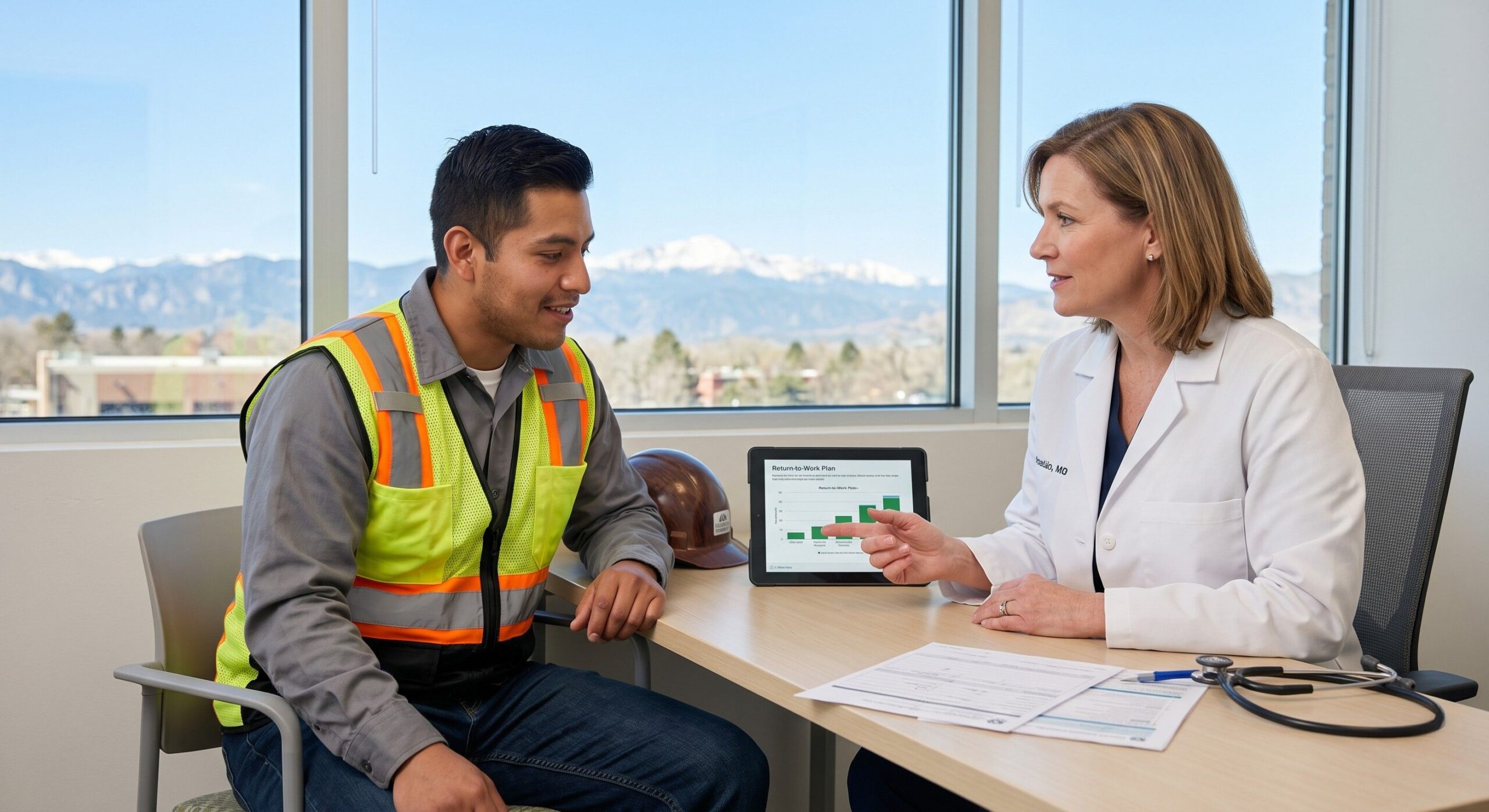
- Proactive Return-to-Work Assignments: Utilizing modified duty is a vital sign of support. It allows the individual to maintain a steady income and a professional routine while healing.
- Level II Accredited Oversight: Specialized physicians understand the complexities of the local regulatory landscape. This expertise ensures that work restrictions are clinically accurate from the start.
- Centralized Communication: Maintaining a single point of contact between the employer and the medical provider prevents administrative bottlenecks.
- Bilingual Support: Access to Spanish-speaking staff during all operating hours ensures that safety protocols and recovery plans are clearly understood by the entire workforce.
Provider-Led Care for Cost Containment
A supportive environment must be built on clinical precision and clear documentation. Midtown Occupational Health operates as a doctor-owned practice. We prioritize medical authority over corporate benchmarks. By consolidating services like physical therapy and specialty evaluations under one roof, we eliminate the referral loops that often delay recovery. Our providers deliver the detailed medical reports and objective capacity testing required to manage claims with total clarity.
Partner with our specialized clinical team to navigate the complexities of injury care while reinforcing the resilience of your workforce.
© 2026 Midtown Occupational Health Services