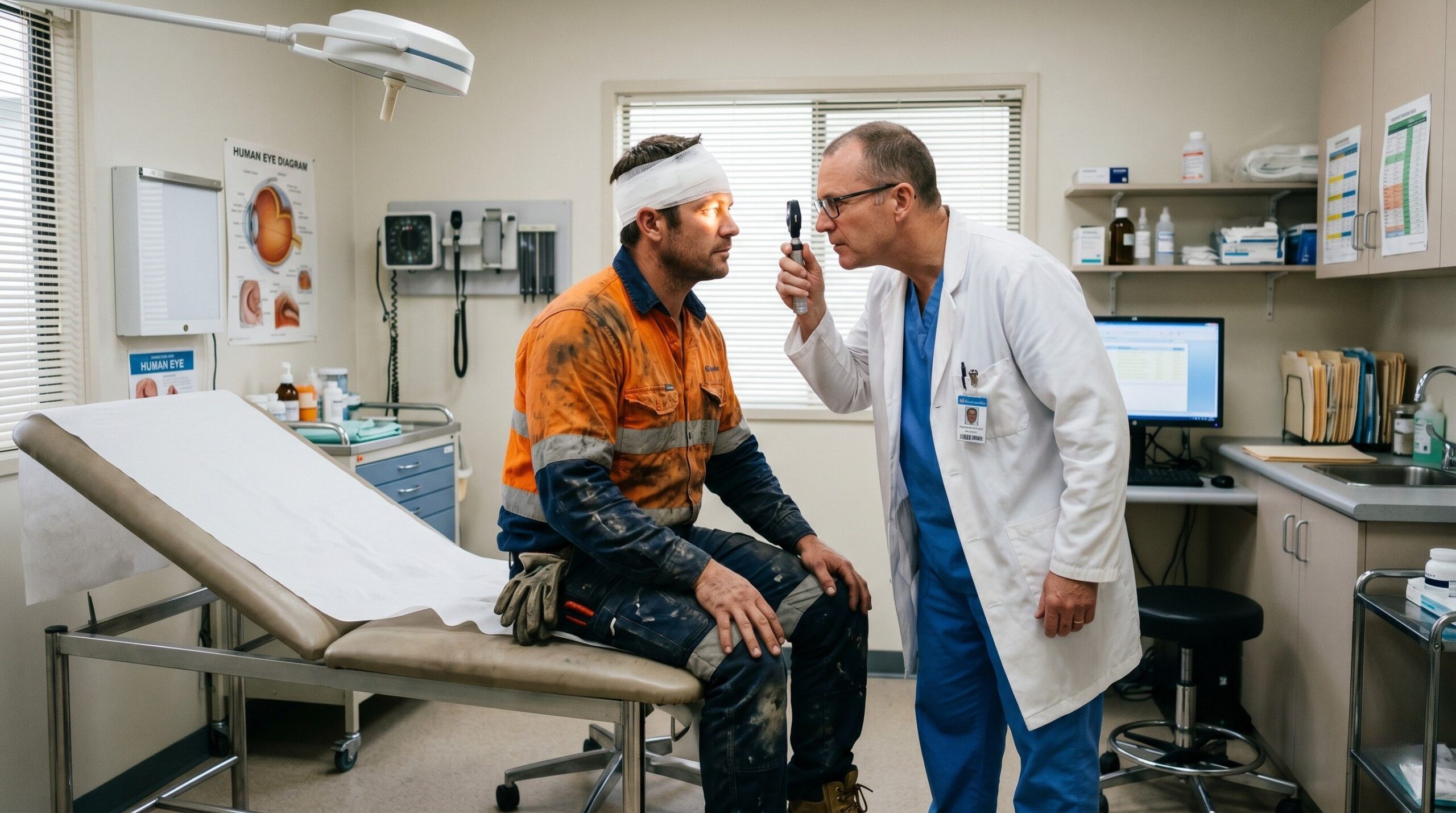
Applying Elite Medical Protocols to Workplace Concussion Management
September 1, 2026In the high-velocity industrial sectors along the I-25 corridor, a head injury is a significant threat to operational continuity. Whether caused by a fall on a construction site or a struck-by incident in a warehouse, concussions require a sophisticated medical response to ensure a safe return to duty. September is National Concussion Awareness Month, which serves as a critical annual checkpoint for employers to audit their head injury safety standards. For a provider-led practice, this period emphasizes the necessity of objective clinical data over the “wait and see” approach found in generic urgent care. Failing to move beyond basic observations can lead to extended downtime and a permanent loss of workforce readiness.
The Operational Impact of Mismanaged Head Injuries
A concussion is a functional brain injury that does not appear on standard imaging like X-rays or CT scans. When a general walk-in clinic lacks specialized training, the lack of a clear clinical path directly impacts the employer’s productivity.
- The Risk of Secondary Incidents: Returning an employee to a safety-sensitive role without objective clearance increases the likelihood of a second, more severe accident.
- Prolonged Recovery Timelines: Fragmented care leads to “waiting days” where an employee remains off the job because a provider cannot accurately subtype the injury or manage vestibular symptoms.
- Administrative Friction: Managing a complex brain injury through multiple outside specialists creates a communication gap. This forces managers to navigate conflicting medical notes and unclear work restrictions.
The WorkSafe Strategy: Provider-Led Functional Recovery
Midtown Occupational Health operates as a doctor-owned, single-site medical home. Our WorkSafe Head Injury Program eliminates the gaps that typically stall a return to full function.
- Objective Cognitive Screening: We utilize specialized software to measure cognitive status against objective benchmarks. This data-driven approach removes guesswork and provides the evidence-based documentation required by insurance adjusters.
- Level II Accredited Oversight: Our physicians are experts in the medical and legal nuances of the Colorado Division of Workers’ Compensation. They identify specific subtypes, such as cervical or vestibular issues, to provide targeted rehabilitation.
- Real-Time Collaboration: Because our physical therapy and balance specialists operate in the same building as our doctors, care is adjusted immediately based on recovery progress. This avoids the delays inherent in the traditional referral loop.
Medical Authority for Operational Stability
Managing complex brain injuries requires a partner that prioritizes medical outcomes and employer needs over corporate benchmarks. Since 1982, we have focused on providing the medical authority required to resolve workers’ comp cases with total clarity. Our bilingual staff ensures that all recovery protocols are communicated clearly in both English and Spanish. This ensures that every member of the workforce understands their specific path to a safe and durable recovery.
Partner with our specialized medical team to implement a proactive head injury strategy that safeguards your employees and your operational uptime.
© 2026 Midtown Occupational Health Services